 Shaker Lane Building Project Update

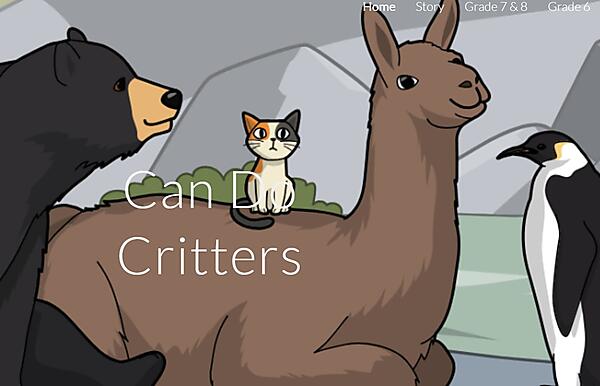
We are proud to report the successful completion of our 5th Annual District-Wide STEM Challenge, which ran from April 27 to May 29, 2026, and concluded with our celebratory Closing Ceremonies Video. Please take a look to join in celebrating our students’ success!
This year’s event saw outstanding participation across the district, capturing 461 project posts representing over 1,200 PreK-8 students and our LHS mentors.
The initiative successfully achieved its core mission: connecting students to a larger community, promoting student agency, building creative confidence, and providing meaningful leadership roles for our high school students.
This year’s challenge was called Can Do Critters where the challenge was presented in a story format where students acted as "Can Do Engineers"—a framework intentionally designed to reflect the culture and uniqueness of our Littleton student body.
Moving through the 6 steps of the Engineering Design Process (Ask, Imagine, Plan, Create, Improve, and Share), students resolved 4 real-world problems for animals across 4 distinct settings:
Inclusivity and joyful learning sat at the center of this challenge, sparking an authentic excitement across our classrooms as students confidently saw themselves as capable, real-world creators and problem solvers. Grounded in Universal Design for Learning (UDL), the framework provided multiple entry points and multiple opportunities for success, accommodating built-in variability based on individual student interests, skills, and unique abilities. The challenge also promoted opportunities to practice empathy—in this case toward animals—as a foundational element of the role engineers play in society. In addition, the experience was rich with meaningful opportunities for reflection through our shared Padlet.
A defining feature of this cross-school effort was the leadership opportunity provided to Littleton High School (LHS) students. LHS mentors volunteered to act as role models for our K-8 innovators, earning 10 hours of community service. Mentors completed the challenge themselves and actively supported the younger students by providing positive video feedback and comments on at least 10 individual student projects.
Thank you for your continuous support in making STEM an equitable, empowering, and foundational experience for all of our students.